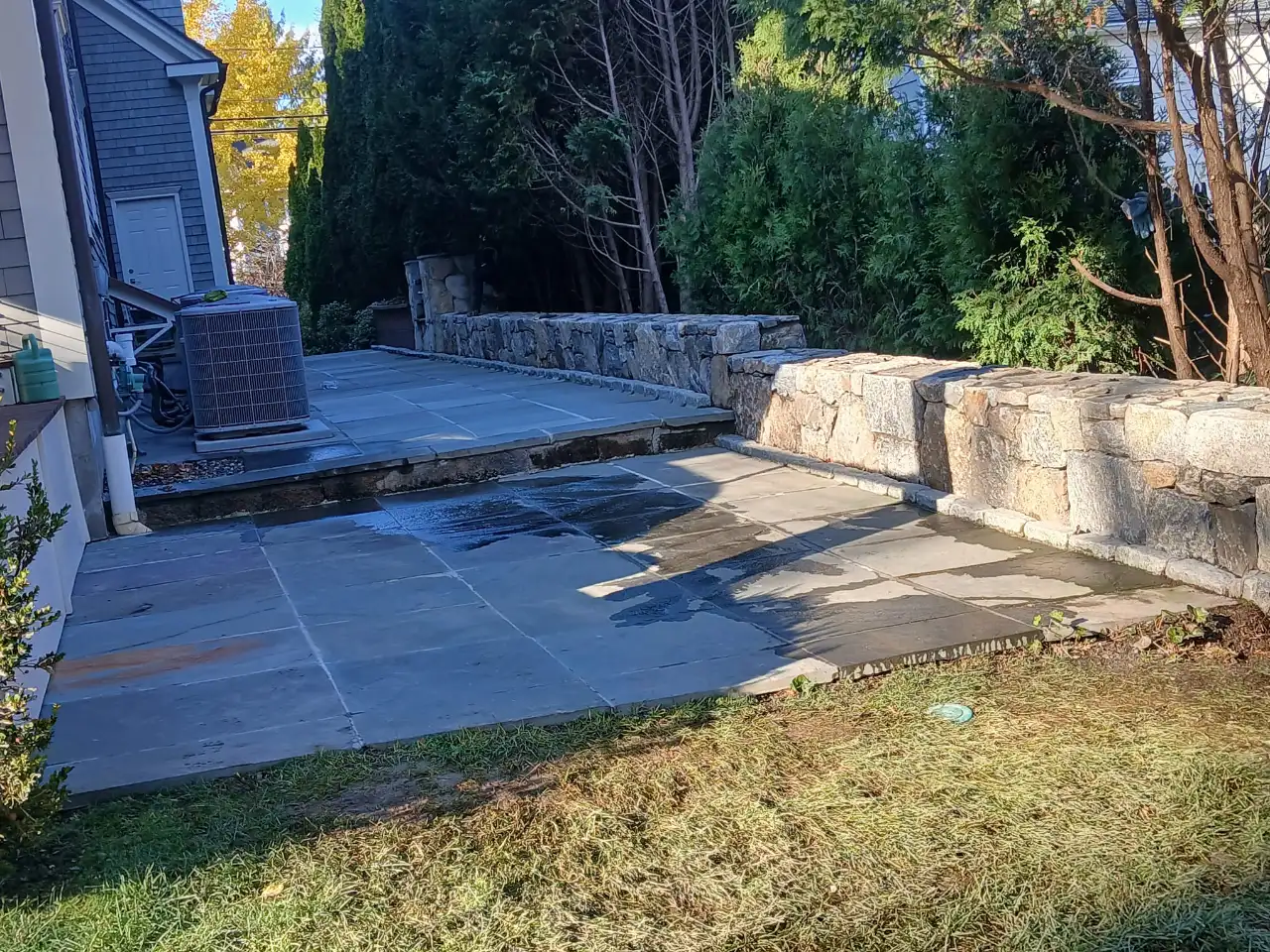
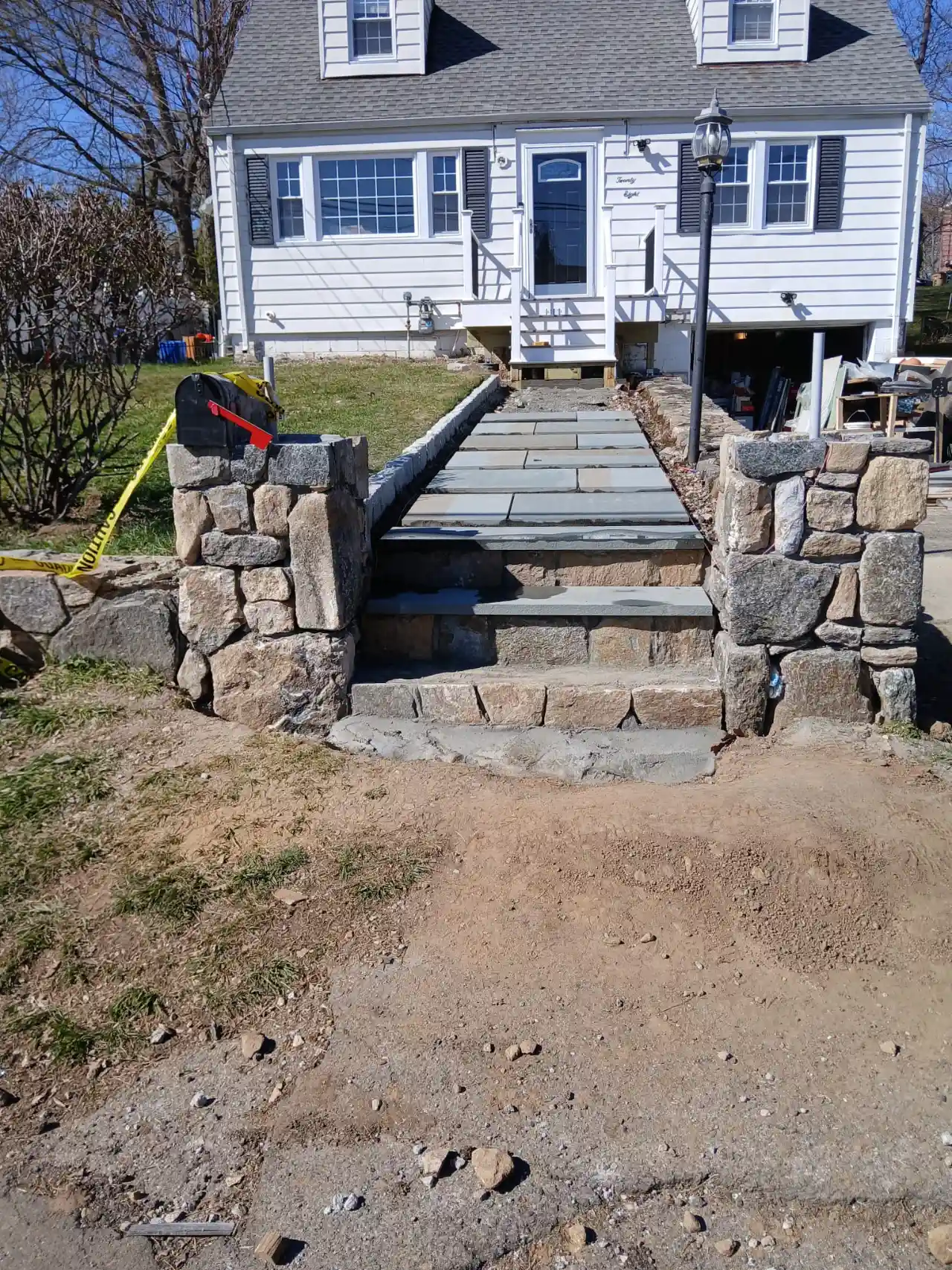
If you're planning a new patio, driveway, or walkway, one choice comes up again and again: Belgard pavers or poured concrete? Both are popular in Connecticut, and both can look great, so the right answer really comes down to your budget, your style, and how you want the surface to hold up over time. Pavers and concrete behave differently in our climate, especially through the freeze-thaw cycles that come with Connecticut winters. They also differ on cost, maintenance, and how easy they are to repair down the road. In this guide, we'll compare Belgard pavers and concrete side by side so you can make a confident decision.
Durability in Connecticut's Freeze-Thaw Climate
Durability is where the difference really shows in Connecticut. Poured concrete is one solid slab, so when the ground shifts or freeze-thaw cycles go to work, it tends to crack. Once a concrete slab cracks, that crack usually spreads and it's hard to hide.
Belgard pavers handle movement better. Because they're individual units set over a flexible base, they can shift slightly with the ground instead of cracking. That flexibility is a big advantage through our winters. Pavers are also made to be strong and are rated to handle heavy loads, which makes them a solid choice for driveways. Both options last a long time when installed correctly, but in a climate with real freeze-thaw stress, pavers often keep their look and structure longer with fewer cracks to deal with.
Appearance and Design Options
Looks matter, and this is where pavers pull ahead for a lot of homeowners. Belgard pavers come in a wide range of colors, shapes, textures, and patterns, so you can match your home's style or create a custom look. You can mix colors, add borders, and build curves and detailed layouts that a plain slab can't match.
Concrete has come a long way too. Stamped and stained concrete can mimic the look of stone or brick, and a smooth modern slab has a clean appeal. Still, concrete's design options are more limited than pavers, and stamped finishes can fade over time. If a high-end, custom look is a priority, pavers usually give you more to work with. If you prefer a simple, uniform surface, concrete does the job.
Cost, Maintenance, and Repairs
Cost is often the deciding factor, so let's be straight about it. Poured concrete usually has a lower upfront cost than pavers. Pavers cost more to install because of the materials and the labor-intensive process. Where pavers win back some of that cost is over the long term.
When a paver gets stained or damaged, you can lift and replace that single unit, and the repair blends right in. Fixing cracked concrete is harder, and patches often stand out. Maintenance is fairly simple for both. Pavers may need occasional re-sanding of the joints and a resealing now and then. Concrete may need sealing and crack repair over time. Actual pricing depends on the size, materials, and site conditions of your project, so a free estimate is the only way to get real numbers for your patio or driveway.
Which Should You Choose?
So which one is right for you? It comes down to priorities. If your main goal is the lowest upfront cost and a simple, uniform surface, poured concrete is a reasonable pick. If you care about long-term durability, a custom look, and easy repairs, Belgard pavers are usually worth the extra investment, especially given Connecticut's freeze-thaw winters.
Think about how you'll use the space too. A high-traffic driveway or a patio you want to be a showpiece often makes a strong case for pavers. A basic walkway or a tight budget might point toward concrete. There's no single right answer for every property, which is why it helps to talk with someone who installs both. We can look at your project, walk through the options, and give you a free estimate so you can decide with real information.
Frequently Asked Questions
Are Belgard pavers more expensive than concrete?
Usually, yes, upfront. Pavers cost more to install, but they can save money long-term thanks to easier repairs and a longer good-looking life.
Do pavers crack like concrete?
They're much less likely to. Because pavers are individual units on a flexible base, they shift with the ground instead of cracking like a solid slab.
How long do Belgard pavers last?
Installed correctly, Belgard pavers can last for decades. Proper base prep and drainage are what keep them level and lasting in Connecticut.
Which is better for a driveway in Connecticut?
Pavers are a strong choice for driveways. They handle heavy loads and freeze-thaw movement well, and damaged units are easy to swap out.
Can you install both pavers and concrete?
We focus on Belgard paver and wall installation. Reach out and we'll help you figure out the best surface for your project and budget.
Get Your Belgard Paver Estimate in Connecticut
Still deciding between pavers and concrete? Let's talk it through. Reach out for a free, no-obligation estimate on your Connecticut patio or driveway.