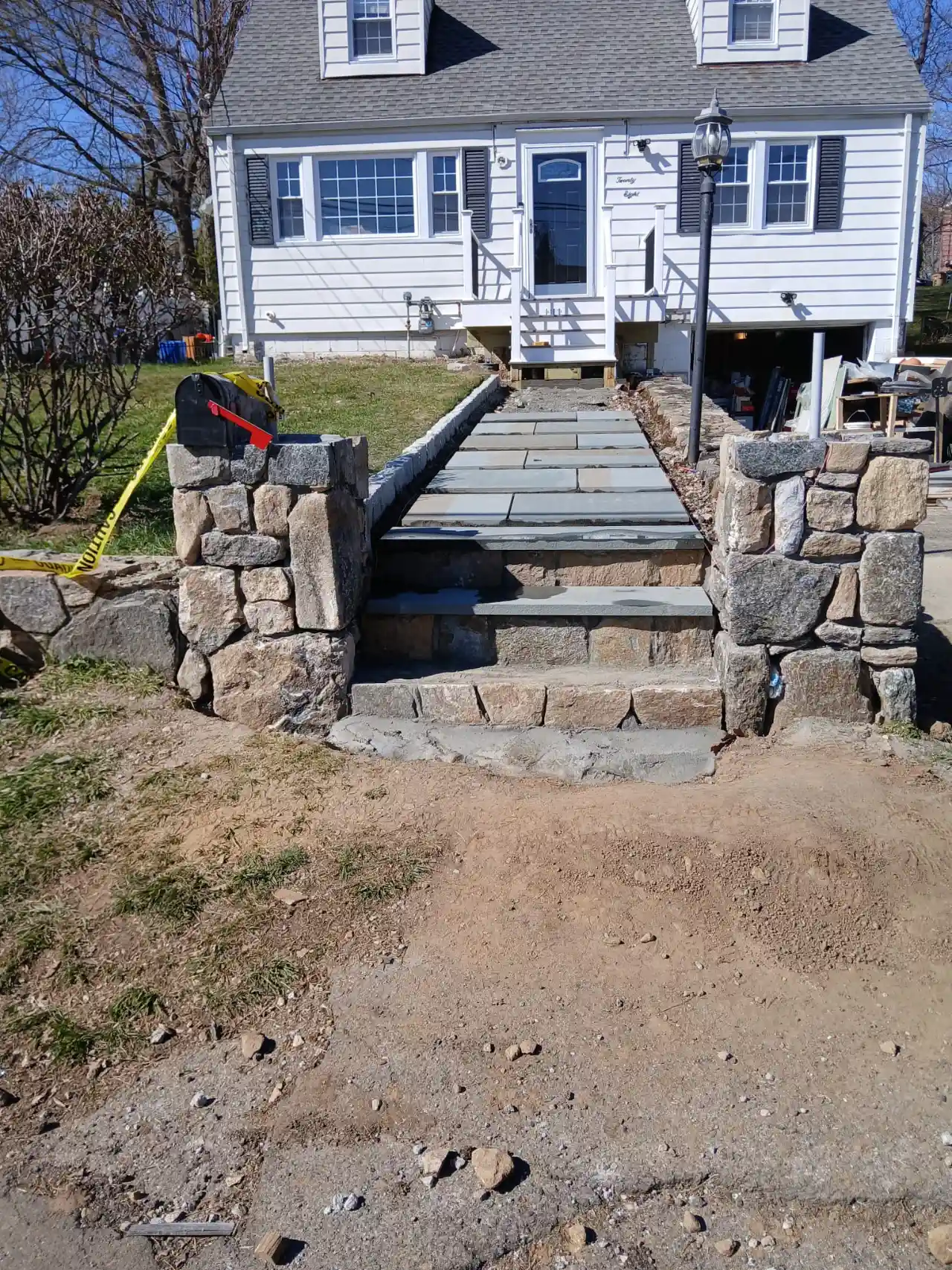
If your front steps are cracking, crumbling, or wobbling underfoot, you're not alone. Masonry step damage is one of the most common problems we see at Connecticut homes, and it tends to get worse fast once it starts. Brick, concrete, and stone steps all take a beating here. Between heavy foot traffic, road salt, and Connecticut's freeze-thaw cycles, even well-built steps can start to fail after a decade or two. The good news is that most step damage is fixable, and catching it early saves you money. In this guide, we'll walk through why masonry steps crack in Connecticut, how to tell whether you need a repair or a full rebuild, and what you can do to keep your steps solid for longer.
What Causes Masonry Steps to Crack in Connecticut?
Masonry steps crack for a handful of reasons, and usually it's more than one working together. Water is the biggest culprit. When water seeps into small cracks or gaps in the mortar, it sits there and does damage over time. Poor drainage around the steps makes it worse, since water pools instead of running off.
Settling is another common cause. If the ground under your steps shifts, or the base was not compacted well during the original build, the steps can sink or tilt. Add in road salt, which eats away at concrete and mortar, and years of foot traffic, and you've got the recipe for cracks, loose treads, and crumbling edges. Knowing the cause matters, because a good repair fixes the source, not just the symptom.
Freeze-Thaw Damage and Connecticut Winters
Connecticut winters are hard on masonry, and freeze-thaw cycles are the main reason. Here's how it works. Water gets into the small pores and cracks of your brick, concrete, or stone. When temperatures drop, that water freezes and expands. When it warms up, the water thaws and the material contracts. Repeat that cycle dozens of times each winter, and the constant expanding and contracting slowly breaks the masonry apart.
You'll often see the results in spring: spalling concrete, flaking surfaces, widening cracks, and mortar that crumbles when you touch it. This is why steps that looked fine in the fall can suddenly look rough by March. Sealing and proper drainage help a lot, but once freeze-thaw damage sets in, the affected sections usually need real repair to stop it from spreading.
Repair or Replace: How to Tell the Difference
Not every cracked step needs a full rebuild, so it helps to know what you're looking at. Small surface cracks, minor chips, and worn mortar joints are usually good candidates for repair. A skilled mason can patch, repoint, and resurface these so the steps look and work like new.
It's a bigger job when the damage is structural. If the steps are sinking, pulling away from the house, or the base itself has failed, patching won't hold for long. In those cases, a rebuild gives you a stronger, longer-lasting result. Loose or rocking treads and large sections of crumbling concrete usually point toward replacement too. The safest move is to have someone look at it in person. A free estimate will tell you whether a repair makes sense or whether rebuilding is the smarter investment.
How to Keep Your Steps Solid Longer
A little maintenance goes a long way with masonry steps. Start with drainage. Make sure water runs away from your steps, not toward them, and clear any debris that traps moisture. Sealing helps too. A quality masonry sealer slows down water absorption, which is the root of most freeze-thaw damage in Connecticut.
Go easy on the road salt in winter, since it's rough on concrete and mortar. Sand or a masonry-safe de-icer is a gentler choice. Keep an eye on small cracks and get them patched before they grow, because water loves an opening. And when you do need work done, use materials that match your existing steps so repairs blend in and hold up. Simple upkeep like this can add years to your steps and keep them safe for everyone who uses them.
Frequently Asked Questions
How much does masonry step repair cost in Connecticut?
It depends on the size, materials, and how much damage there is. A small patch job costs a lot less than a full rebuild. The best way to get real numbers is a free estimate.
Can you repair just part of my steps?
Often, yes. If the damage is limited to one area, we can repair or rebuild that section and match it to the rest so it blends in.
How long do masonry steps last?
Done right and maintained, masonry steps can last decades. Drainage, sealing, and the quality of the original build all play a big role.
Are cracked steps a safety hazard?
They can be. Loose treads, wobbling, and crumbling edges are trip hazards, so it's worth handling cracked steps sooner rather than later.
Do you match my existing brick or stone?
We do our best to match the color, size, and finish of your existing steps so the repair blends in with what's already there.
Get Your Masonry Step Repair Estimate in Connecticut
Cracked or crumbling steps won't fix themselves. Reach out for a free, no-obligation estimate and we'll get your entry safe and solid again.